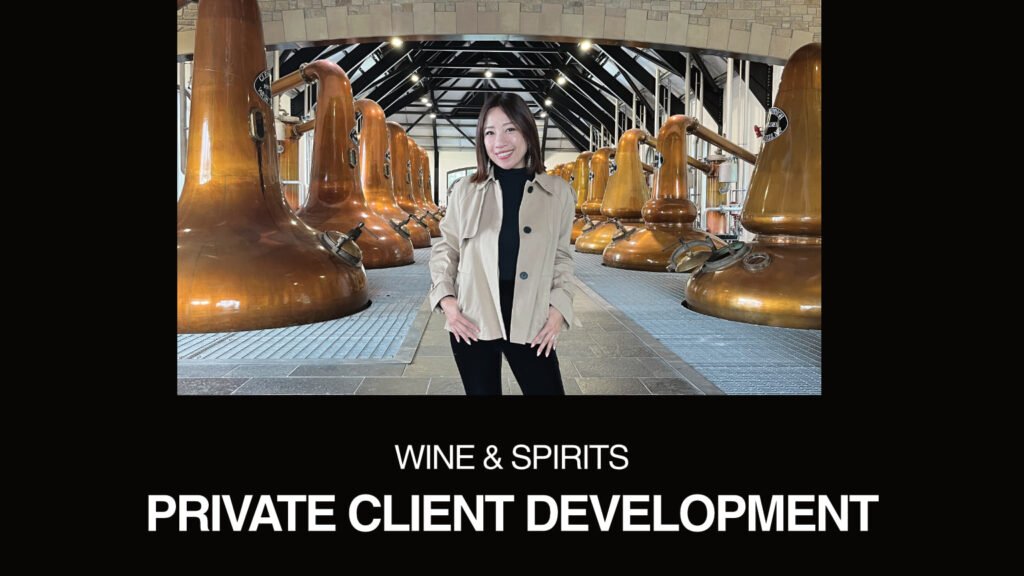
Wine and spirits private client development is the practice of building long-term relationships with collectors through personalised advice, collection planning, curated experience and contact that continues between purchases. It treats the collection as the unit of work rather than the transaction.
Why do collectors choose an advisor over an expert?
Because expertise is widely available and judgement is not. Plenty of people can speak accurately about vintages, distilleries and investment potential. Far fewer can work out what a particular collector is actually assembling and why.
Decisions at this level are rarely driven by score, rarity or market value on their own. They are shaped by identity, legacy, gifting, celebration, personal achievement and family tradition. A collector who buys the same bottle for two different reasons needs two different conversations, and the advisor who identifies which one is happening will be the advisor they call next.
What should an advisor ask before recommending anything?
Questions about the collection rather than the purchase. What story is this collection telling. How do you intend to enjoy these bottles. Are you buying for investment, for entertaining, or for the next generation. Which experiences shaped what you like.
These are not conversational warm-ups. Each answer changes what a good recommendation looks like, and a collector who has answered them has told the advisor something no competitor can price against.
The habits of strong private client advisors
Understand the collector before the collection
Motivations vary widely. Some collectors are building an investment position, some are chasing provenance, some are marking family milestones. Curiosity applied before recommendation surfaces opportunities that product conversation never reaches. This is the first of the Three Cs the Academy teaches: Connect, then Communicate, then Cultivate.
Curate rather than sell
Private clients expect editing. Narrowing the field to a small number of options chosen against the client’s stated goals and existing holdings reduces decision fatigue and raises confidence. Repeated over time it makes the advisor difficult to replace.
Create experiences that generate knowledge
Private tastings, cellar consultations, masterclasses and producer visits are often remembered longer than the purchase. They also do something commercially useful: every experience reveals more about how a collector’s taste is moving.
Stay present between purchases
Relevant vintage releases, collection milestones, storage guidance, pairing suggestions, event invitations and allocations matched to existing interest. The objective is not frequent contact. It is consistently relevant contact, which is a much harder discipline and a much rarer one.
Adapting to the collector in front of you
One collector wants the technical detail and will read every note. Another wants the story of the family that owns the vineyard. A third wants a short, confident recommendation from someone they trust and no further explanation. Delivering the same approach to all three will work for one of them.
The Academy teaches this as the Clienteling Wardrobe™, its instrument for reading how a client wants to be recognised and how an advisor naturally shows up. It reads in both directions, so an advisor learns their own default as well as the collector’s. Much like a wardrobe, some pieces are instinctive and others take practice to wear comfortably. The approach draws on transactional analysis (Berne, 1964), applied to the tasting room rather than the consulting room.
For brands serving collectors across several markets, that flexibility is what allows one advisor to hold relationships that would otherwise depend on happening to be well matched to each collector.
How does collection strategy build loyalty?
By moving the conversation from what to buy now to what the collection should look like in five years.
With a rare whisky collector, that might mean designing a plan that balances heritage distilleries, emerging producers, positions held for value and bottles bought to be opened. With fine wine it may cover cellar evolution, drinking windows, diversification across regions and eventually succession.
A collector with a plan has a reason to come back that is not price. That is the difference between purchasing and partnership.
How is this built across a team?
Through structure rather than recruitment. The Diagnostic Suite establishes where capability actually sits before a programme is designed. The Certification Ladder develops advisors and leaders progressively. The Embodiment Programmes and Learning Labs rehearse the behaviour until it holds in a real conversation with a demanding client.
It sits inside the Art & Science of Clienteling™, which pairs the human craft with commercial structure and reflects our founder’s two decades of client development across Louis Vuitton, Burberry, Farfetch and DFS.
Why does behaviour matter more than product knowledge?
Product expertise establishes credibility, behaviour builds trust, and trust is what produces a relationship that survives a bad vintage, a price rise or a competitor with better allocation.
The advisors who last in this category are not remembered for what they sold. They are remembered for the judgement they brought to a decision the client cared about.
Book a Discovery Call or Request a Capability Assessment
Key takeaways
• Collectors rarely buy on score or rarity alone. Identity, legacy, gifting and family tradition usually decide it, and none of those appear on a tasting note.
• Product expertise establishes credibility. It does not create loyalty, because every serious competitor has it too.
• Curate rather than present. Narrowing to a considered few does more for confidence than presenting everything available.
• The strongest programmes sell a collection strategy over years, not a bottle this quarter.
• The Clienteling Wardrobe™ gives advisors a way to read how a collector wants to be advised, and to adjust how they show up.
Frequently asked questions
What is private client development in wine and spirits?
Building long-term relationships with collectors through personalised advice, curated experience and collection planning, rather than focusing on individual transactions.
How can advisors improve collector loyalty?
By understanding what the collection is for, curating rather than presenting, staying relevant between purchases and adapting how they communicate to the individual.
Why does behavioural training matter for advisors?
Because product knowledge is table stakes at this level. What differentiates is the ability to read a collector, build trust and develop the relationship deliberately over years.
How long does it take to build a private client book?
It takes longer than most brands expect before it produces predictable repeat business. The early return usually comes from reactivating collectors the brand already has rather than from finding new ones.
How does The Clienteling Academy work with wine and spirits brands?
Diagnostics first to establish where capability sits, then progressive development through the Certification Ladder, then reinforcement in Learning Labs until the behaviour holds.