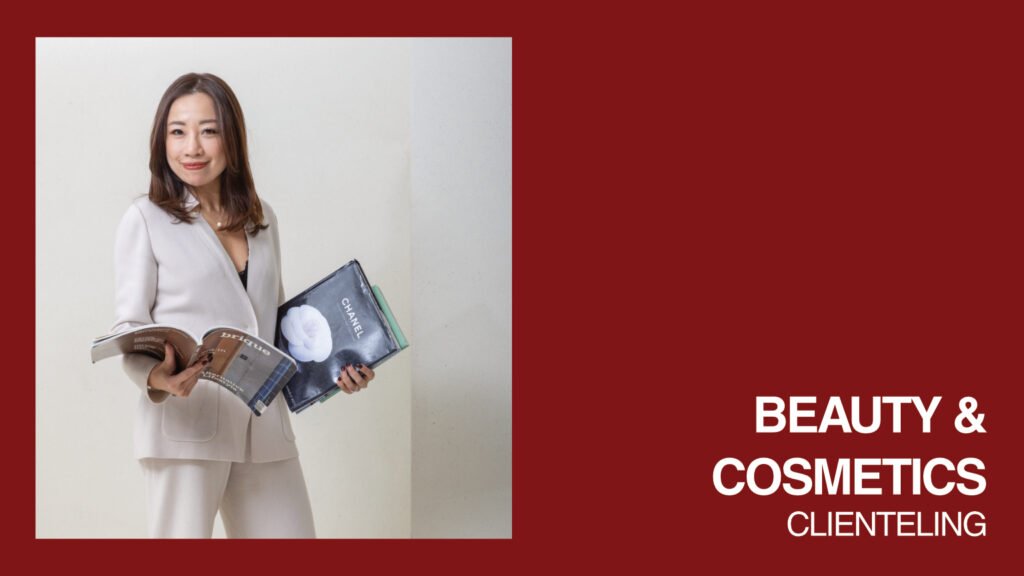
Beauty and cosmetics clienteling is the practice of building a long-term relationship through personalised consultation, behavioural understanding and follow-up that creates value rather than prompts a repurchase. It treats the replenishment cycle as a relationship rhythm rather than a reorder.
Why does clienteling matter more in beauty?
Frequency. Skincare, fragrance and cosmetics are replenished in a way that handbags and watches are not, which gives beauty more natural contact points than any other luxury category. Every replenishment, seasonal adjustment and fragrance discovery is a legitimate reason to be in touch.
At the same time the client has become expert. They research ingredients, compare formulations and arrive knowing what they think they need. An advisor who can only describe the product has been made redundant by the internet. An advisor who can interpret, challenge and guide has not.
Bain & Company and Altagamma’s Luxury Goods Worldwide Market Study has consistently found client experience to be a differentiator as luxury markets get more crowded. In beauty, where the product itself is easily compared, that pressure lands hardest on the quality of the conversation.
Why does relationship come before product?
Because product expertise does not create loyalty on its own, and many organisations train for it first. Technical knowledge is necessary. It is not what makes someone come back to a particular advisor.
The conversations that build loyalty uncover beauty aspirations, daily routine, lifestyle and travel patterns, seasonal concerns, previous experiences good and bad, and where the client wants to get to. Recommendations built on those answers read as consultative. Recommendations built on the category read as promotional, and clients can tell the difference within a sentence.
This is where the Three Cs apply: Connect, Communicate, Cultivate. Establish the relationship, adapt how you speak to the person in front of you, then develop it deliberately over time rather than waiting for the client to return.
What are the rituals that actually work?
Discovery before recommendation
Begin with the routine, the concern, the lifestyle influences, what has been tried and what the client wants to change. Clients remember how carefully they were listened to for far longer than they remember any individual product claim.
Connect the product to the client’s own story
Rather than presenting the science of a formulation in isolation, explain how it fits a travel-heavy schedule, a demanding season, or a longer-term ambition the client has already described. The ingredient becomes relevant because it belongs to them.
Follow up with something new
Most follow-up fails because it asks a single question the client has no reason to answer. Purposeful follow-up brings something: a seasonal adjustment, application guidance, a complementary step, an invitation, a fragrance consultation. Every contact should leave the client better off whether or not they buy.
Build the ritual around replenishment
A generic reminder says the system noticed. An anticipatory recommendation says a person did. A client heading into winter should hear about what changes, not about what is running out.
Revisit and celebrate progress
Skincare results arrive slowly. Advisors who return to what was discussed months ago, mark the change and adjust the recommendation become partners in a journey rather than a point of purchase.
Behaviour rather than a script
Scripts cannot accommodate the range of people who walk into a beauty counter. Service standards produce consistency, which is worth having, but consistency delivered identically to everyone is experienced by most clients as being processed.
The Art & Science of Clienteling™ starts from behavioural mastery instead. It reflects our founder’s two decades of luxury leadership across Louis Vuitton, Burberry, Farfetch and DFS.
The Art
Emotional intelligence, presence, storytelling, influence, and reading what a client has not said.
The Science
Structured client development, commercial discipline and deliberate relationship planning, so that growth is designed rather than hoped for.
Adapting the consultation to the client
Every client wants something different from a consultation. Some want the mechanism explained in detail. Some want reassurance. Some want to be led, others resent it. Delivering the same consultation to all of them guarantees it lands well with a minority.
The Academy calls this the Clienteling Wardrobe™. It reads the client and the advisor with the same instrument, which is what makes it coachable: a counter manager can name the register an advisor defaults to and the one they avoid. Some registers are instinctive, others are learned in the way a client grows into a new look. The underlying idea comes from transactional analysis (Berne, 1964).
For brands serving international clientele across several markets, that flexibility is the difference between a consultation that travels and one that only works at home.
How does individual talent become organisational capability?
Individual talent produces isolated success. Consistency requires structure, which the Academy provides in three parts.
• The Clienteling Excellence Diagnostic Suite assesses capability and ecosystem before any programme is designed, so development addresses the actual gap.
• The Clienteling Excellence Certification Ladder develops behaviour progressively from foundational skill through leadership.
• The Clienteling Embodiment Programmes and Learning Labs rehearse the behaviour until personalised client development is ordinary practice rather than occasional excellence.
What do beauty professionals gain?
Greater confidence in personalised consultation, sharper client perception through the SPCV model, stronger customer-centric thinking, behavioural flexibility through the Clienteling Wardrobe™, better storytelling and
influence, commercial discipline that does not cost authenticity, leadership behaviour that reinforces the culture, and continuing development through the Clienteling Excellence Ambassador community.
Why are luxury beauty brands investing in this?
Because the product is the easiest thing for a competitor to match and the hardest thing to defend. Formulations converge, claims converge, and the counter next door has a serum too.
What does not converge is a team that understands clients deeply, adapts how it communicates, personalises every consultation, follows up with purpose and builds the relationship over years. That is difficult to replicate because it is behavioural, which is precisely why it is worth building.
Book a Discovery Call or Request a Capability Assessment
Key takeaways
• Beauty has something no other luxury category has: a built-in reason to be in touch again. Replenishment is the relationship opportunity most brands waste.
• Clients now arrive informed. The advisor’s value has moved from knowing the product to guiding the decision.
• Rituals beat scripts. A repeatable sequence that adapts to the person outperforms a standard consultation delivered identically.
• Follow-up should add something. “How are you enjoying it?” asks the client to do the work.
• The Clienteling Wardrobe™ gives advisors a way to read how a client wants to be advised, and to adjust how they show up.
Frequently asked questions
What is beauty and cosmetics clienteling?
A relationship-building approach combining personalised consultation, behavioural understanding and ongoing engagement to build loyalty and lifetime value rather than individual transactions.
How can beauty advisors improve client relationships?
By opening with discovery rather than recommendation, tailoring advice to the routine and lifestyle described, following up with something of value, and adapting how they communicate to the individual.
Why is behavioural training important in beauty?
Because clients now arrive informed, which moves the advisor’s value from product knowledge to guidance. Guidance depends on emotional intelligence, adaptability and structured client development.
What usually goes wrong when brands roll this out?
Training the counter but not the counter manager. If team leaders still measure the day by units sold, advisors revert to transactional habits.
What makes The Clienteling Academy’s approach different?
It combines the Art & Science of Clienteling™ with the Three Cs, the Certification Ladder, the Diagnostic Suite and the Embodiment Programmes, and is built around lasting behaviour change rather than product training.