
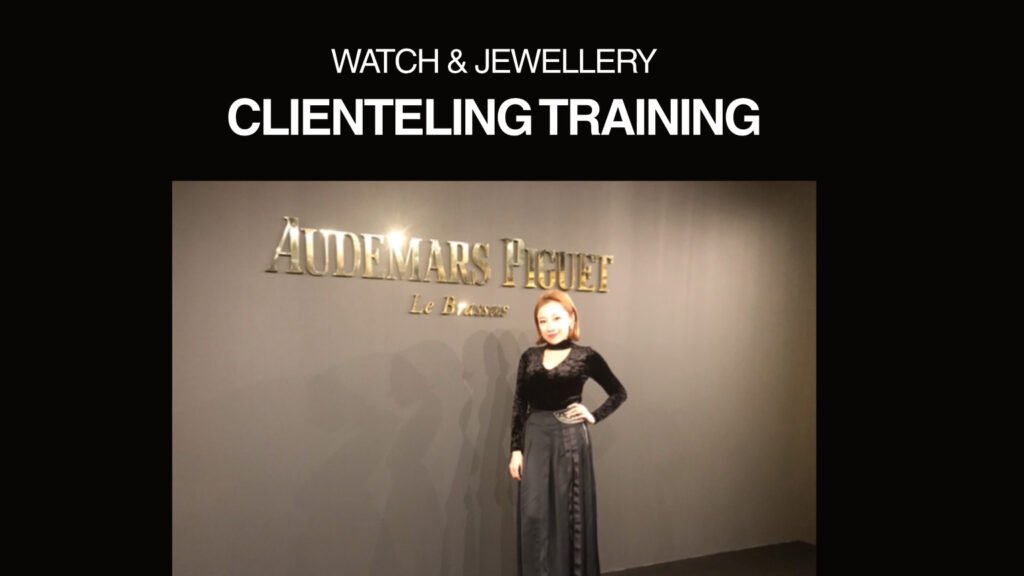
Watch and jewellery clienteling is the practice of establishing the occasion and the person before recommending a piece. Purchases in this category are usually attached to an event, they are often made for somebody else, and an advisor who finds out what is being marked can recommend on grounds the client recognises as their own. Product knowledge is the entry requirement in this category rather than what separates the strongest advisors from the rest.
Why does the occasion matter more than the budget?
Almost nobody buys a significant watch or a significant piece of jewellery on an ordinary day. An engagement, a birth, a promotion, a retirement or a private reckoning with years of work sits behind the visit, and the client will not always volunteer it. Budget indicates which cabinet to walk towards. The occasion indicates what to say on arriving there.
A client looking at engagement rings is doing something other than comparing carat weight, and somebody buying a watch for themselves may be closing a loop that opened in childhood. The object is the visible part of the purchase. The meaning attached to it is reachable only through conversation, which is why an advisor who does not ask is recommending blind.
What should an advisor establish before showing a piece?
A useful discovery gives the advisor enough to make a recommendation that could not have been made for anybody else: how the client lives and where the piece fits into that, what they already own and what it says about their taste, the milestone being marked, family traditions where they apply, and where they imagine this going next.
Opening questions that work tend to be plain. What brings you in today. Is this marking something. Who will wear it. What would you want it to say. Each of those moves the appointment towards the person before a tray comes out.
The difference is visible to the client rather than theoretical. An advisor who has understood the occasion brings out a short considered selection and can say why each piece is on the tray, while an advisor who has not brings out the range and leaves the client to sort it.
What a watch communicates about its owner
Watches carry identity as much as they keep time, and the identity being expressed varies widely. Some clients want understatement. Some are drawn to engineering and complication. Some care most about heritage and lineage. Others respond to rarity and to what almost nobody else can obtain.
A collector chasing a complication and a client buying their first serious watch may spend the same money on the same afternoon and need completely different conversations to arrive there. Treating them as the same client because the ticket matches is the error the ticket invites.
Where jewellery differs from watches
Jewellery is more often bought for somebody else, and more often expected to outlast the buyer. Pieces carry love, gratitude, commitment, remembrance and celebration, and they frequently become part of a family’s history rather than an individual’s wardrobe.
Questions that work in jewellery point at the future rather than at the specification. When will it be worn. What moment is it marking. How should the recipient feel when they open it. Is this something you imagine being passed on. A client answering those is describing the piece they want, which leaves the advisor with a much narrower search.
Craftsmanship becomes significance only when the client understands it
Every maison at this level has genuine craftsmanship, so its presence differentiates nothing on its own. Automatic movements, hand finishing, precious metals and rare stones are facts available to any competitor and to any client with a search engine.
The artisan who made the piece, the origin of the design and the traditions still running behind it give a client language for what they are buying. A client who can explain to somebody else why the piece is what it is has been given something a specification sheet does not provide.
How should an advisor handle a decision the client is not ready to make?
High-value decisions take the time they take, and pressure applied to a hesitant client tends to end an appointment rather than close it. The practical measures are unglamorous: give the client room to reflect, narrow the comparison to a considered set rather than the whole cabinet, explain craftsmanship in language the client can repeat to somebody else, invite questions without making anyone feel uninformed, and treat hesitation as a normal feature of a serious purchase rather than an objection to defeat.
Whether patience pays is something a manager can observe directly rather than take on faith: how often a client who left without buying comes back, and how often they come back asking for the same advisor by name.
How does a buyer become a collector?
The transition happens between purchases rather than during them. Every piece sold creates a legitimate reason to make contact that is not promotional: care advice, a service reminder, the anniversary of the occasion the piece marked, an invitation worth accepting, or a recommendation that sits alongside what the client already owns.
Repeated over years, that contact changes who a client consults before deciding. An advisor working on the transaction in front of them and an advisor working on the client’s collection behave differently on the same afternoon, and the difference shows up in what gets written into the record after the client leaves.
Adapting to the person in front of you
Clients communicate differently and want different things from the same appointment. Some want the technical detail and will be irritated by anything less. Some are driven by feeling and will disengage from a specification sheet. Some decide quickly, and others need reassurance and will resent being moved along.
The Clienteling Wardrobe™ is the Academy’s instrument for this. Applied to a client it describes how they want to be met; applied to the advisor it describes the style they fall back on under pressure. Most advisors have two or three registers they wear comfortably and the rest take deliberate practice, which is what makes it a coaching tool rather than a label.
The approach draws on transactional analysis (Berne, 1964), applied to the salon rather than the consulting room. It sits inside the Art & Science of Clienteling™, which reflects our founder’s two decades of client development across Louis Vuitton, Burberry, Farfetch and DFS.
What should a watch and jewellery programme cover?
Product knowledge is where most floors are already strong and where most training budgets already go. A programme worth buying covers discovery conversation, behavioural communication, storytelling a client can repeat, occasion-led recommendation, handling clients whose purchases are private, and the follow-up discipline that turns a first purchase into a relationship.
Category conditions are tracked in the Bain & Company and Altagamma Luxury Goods Worldwide Market Study for anyone who wants the market picture. What an advisor controls is narrower and more immediately useful: the quality of the conversation before the tray comes out, and what happens in the months after it goes back.
Book a Discovery Call or Request a Capability Assessment
Key takeaways
• A significant watch or piece of jewellery is almost always bought to mark something, so the occasion is more useful to an advisor than the budget.
• Bringing out product before the occasion is understood leaves the client to do the sorting and gives the advisor no reason for the pieces on the tray.
• Clients spending the same amount on the same afternoon can be on entirely different journeys, and a first serious watch is not the same conversation as a collector’s acquisition.
• Jewellery is frequently bought for somebody else and often expected to outlast the buyer, which changes the questions worth asking in the appointment.
• The Clienteling Wardrobe™ gives an advisor a way to name the register a client wants and the register they themselves fall back on under pressure.
Frequently asked questions
How should an advisor treat a client who has come in only for a service or a valuation?
Service visits bring a client into the salon with no pressure attached, which makes them the most useful conversations available. The piece being serviced has a history the client can be asked about, and what is learned belongs in the record whether or not anything is sold that day.
What should be written into the client record after an appointment?
Whatever a colleague could act on without the original advisor present: the occasion behind the visit, who the piece is for, what was ruled out and why, and anything the client said about a date that matters to them. Notes describing what was shown rather than what was learned are of little use later.
Does this apply when the buyer will never wear the piece?
Gift purchases make the discovery harder rather than optional, because the advisor is reading the person in front of them in order to reach somebody who is not in the room. The questions move to the recipient: how they dress, what they already wear, and what the buyer wants them to feel when the box is opened.
Who besides advisors should be trained?
Boutique and salon managers, because they decide whether the behaviour is coached after the sessions end. Where a separate appointment or client development team exists, they belong in the same programme so that a record written by either is usable by the other.
How would a manager tell whether this is changing anything?
The observable signs come before the commercial ones: whether the occasion behind a purchase is being recorded, whether clients are contacted between purchases for reasons that are not promotional, and whether returning clients ask for a particular advisor.