
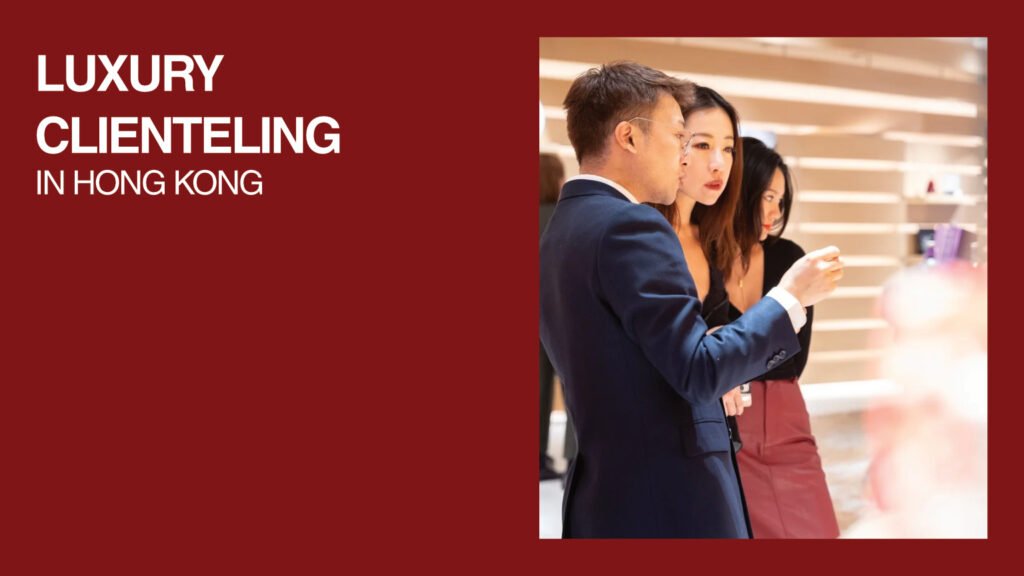
Luxury clienteling in Hong Kong is the discipline of building long relationships in a market where competing flagships stand within a short walk of one another. Cultural fluency is part of the job rather than an addition to it, since the same advisor may host a Mainland collector, a local family and a European business traveller in a single afternoon. What separates the boutiques that keep clients is the quality of the behaviour on the floor.
What do luxury clienteling strategies in Hong Kong involve?
They combine cultural intelligence, behavioural adaptability and disciplined client development, applied consistently rather than saved for special occasions. Clienteling here has less to do with one exceptional visit and more to do with whether the third and fourth interactions feel continuous with the first.
Hong Kong makes this harder than most markets because the client mix changes by the hour. Local collectors, Mainland visitors, regional executives and long-standing VIP families all sit inside the same trading day, and each arrives with a different sense of what attentiveness should feel like.
Why does Hong Kong require a different clienteling approach?
Because the density of choice removes product as a differentiator almost entirely. Causeway Bay alone places competing flagships within a short walk of one another, so a client who feels mishandled has an immediate alternative and no reason to explain why they left.
The market also runs on continuity. A client who has bought from the same advisor for years is maintaining a relationship rather than buying a category, and they notice immediately when it is handled by someone reading their history off a screen for the first time.
Expectations of Chinese high-net-worth clients
Recognition before transaction
Established clients expect to be recognised before anything is presented. Greeting a client by name, referencing the last conversation and knowing what is outstanding on their account signals that the relationship is continuous. Opening with the new arrival tells them it restarts from zero each visit.
Protecting face
Face remains central to how these interactions are judged. In practice that means correcting a misunderstanding privately, offering a discreet consultation space before a client has to request one, and staying composed when something has gone wrong with an order. The aim is that the client is never placed in a position where they might appear uncertain in front of others.
The wider family context
Purchases are frequently made for a spouse, a parent, a child or a business relationship. Asking a client what they are looking for today produces a narrow answer. Asking about the occasion and the person receiving the piece usually produces the conversation that makes the next visit possible.
Hosting on a busy Hong Kong floor
A busy floor is where the sense of exclusivity is most easily lost, so protecting it is the work. Give a realistic waiting time rather than an optimistic one, keep clients informed while they wait, and offer a scheduled appointment as a genuine alternative rather than as a way of moving someone along. Clients tend to remember how a delay was managed more clearly than the delay itself.
Respect for time is itself a form of luxury in this market. Preparing pieces before arrival, resolving alterations quickly and making payment and delivery seamless communicates more than an elaborate welcome does.
Consider a long-standing client from Shenzhen who confirms a Saturday visit. The advisor reviews previous purchases, checks what is outstanding, prepares a small selection aligned to how the collection has been developing and briefs colleagues so recognition is consistent whoever happens to greet her. When she arrives, the conversation starts with her rather than with inventory.
Behaviour outperforms a service script
Scripts do not survive the range of personalities a Hong Kong boutique meets in a week. They standardise the words while the variable that matters is the read: how much detail this client wants, how quickly they want to get to it, and whether they want a companion drawn into the decision.
Behavioural capability also protects advisors from the shortcut of cultural stereotype. Knowing that a market tends towards a preference is close to useless in front of an individual who does not share it, and clients notice when they are being handled as a category.
How does The Clienteling Academy build this capability?
Through The Art & Science of Clienteling™, which pairs the human craft of hosting with the commercial structure that makes client development repeatable. The SPCV model sharpens what advisors actually notice about a client, so observation becomes usable information rather than an impression that fades by the end of the shift.
The Clienteling Wardrobe™ is the Academy’s instrument for reading the person. Applied to a client it describes how they want to be met; applied to the advisor it describes the style they fall back on under pressure. Most advisors have two or three registers they wear comfortably and the rest take deliberate practice on a live floor.
The approach draws on transactional analysis (Berne, 1964), applied to the boutique floor. In a market as culturally layered as Hong Kong its practical value is that it operates at the level of the individual, which keeps advisors from substituting nationality for observation.
The methodology comes out of our founder’s two decades of client development across Louis Vuitton, Burberry, Farfetch and DFS, and it is written for the realities of an Asian trading floor rather than adapted from a European template. Capability is then developed through the Clienteling Excellence Certification Ladder, assessed through the Clienteling Excellence Diagnostic Suite, and embedded through the Clienteling Embodiment Programmes, where Learning Labs rehearse hosting until it holds up on a busy Saturday.
What does client development look like after the sale?
It looks like contact with a reason attached. Marking a milestone, flagging an arrival that genuinely matches a stated interest or checking in after a significant purchase all reinforce the relationship. Volume of contact without relevance does the opposite and is the quickest way to train a VIP client to stop opening messages.
The discipline is deciding what does not get sent. A boutique that contacts its top clients repeatedly with general announcements has confused activity with attention, and the client book will show it.
Book a Discovery Call or Request a Capability Assessment.
Key takeaways
• Density of choice in Causeway Bay removes product as a differentiator, so a mishandled client has an alternative within a short walk and no reason to explain why they left.
• Recognition before transaction is the clearest signal a Hong Kong boutique can send; opening with the new arrival tells a long-standing client the relationship restarts from zero every visit.
• Protecting face is operational rather than ceremonial, meaning private correction of errors, a discreet consultation space offered before it is requested, and composure when an order has gone wrong.
• Respect for time reads as luxury in this market more reliably than an elaborate welcome does.
• Behavioural frameworks outlast cultural checklists because they work at the level of the individual, which stops advisors substituting nationality for observation.
Frequently asked questions
Do advisors need to speak Mandarin to do this well?
It helps and it is not the deciding factor. A fluent advisor who reads the client poorly loses relationships that a less fluent one who prepares carefully keeps.
Why does cultural etiquette matter in Hong Kong luxury retail?
Boutiques serve local, Mainland and international clients within the same trading day. Understanding expectations such as protecting face allows advisors to host respectfully without applying an identical approach to everyone.
What is the Clienteling Wardrobe™?
It is the Academy’s instrument for reading how a client wants to be recognised and how an advisor naturally shows up. It reads in both directions, so advisors learn their own default alongside the client’s.
How is Hong Kong different from other Asian luxury markets?
Choice is denser and continuity counts for more. Many clients have bought from the same advisor for years and notice immediately when the relationship is handled by someone reading it off a screen.
How do brands develop this capability in their teams?
Through diagnosis of current behaviour, structured learning across advisors and managers, and repeated practice in Learning Labs until hosting holds up under the pressure of a busy floor.