
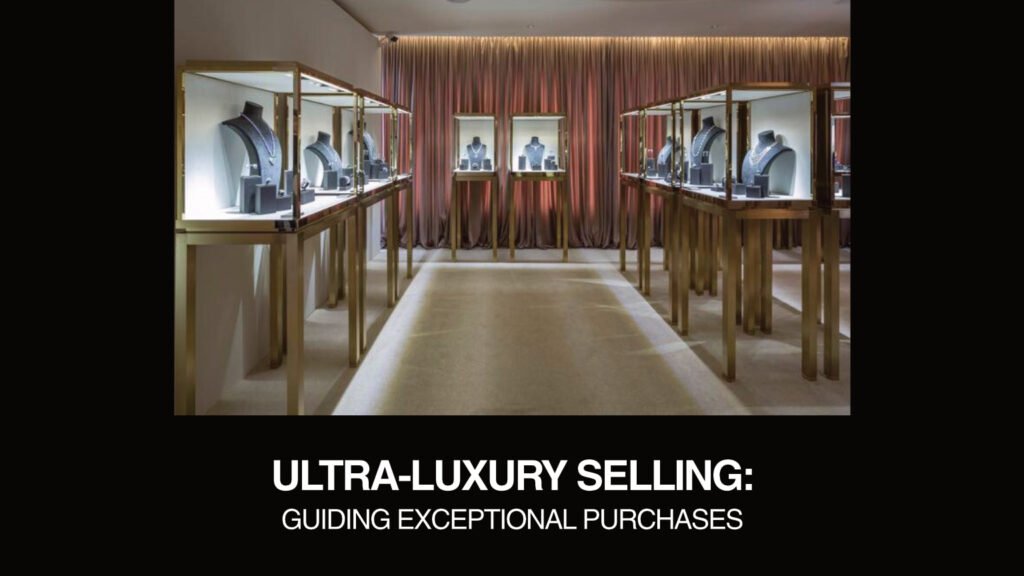
Ultra-luxury selling guides a client through a rare, complex or personally significant purchase by giving them the expertise, accuracy and time to decide well. As significance rises, the advisor becomes more precise, not more persuasive: the selection is edited, rarity is explained honestly and the client keeps full freedom to say no.
What changes in an ultra-luxury sale?
The client’s need for information, time and reassurance rises, and the cost of weak recommendations rises with it. Significance is not price. A decision can matter because of rarity, collecting logic, personal meaning, legacy or an unfamiliar category.
The advisor’s first task is to understand which of those makes this purchase important. That context decides how much detail to offer, how much time to allow and what kind of reassurance will help. There is no single ultra-luxury client type and no universal closing technique. Our page on the psychology of high-net-worth buyers covers why wealth predicts nothing about how a client decides.
In every case the advisor’s judgement carries more weight, because the client is relying on it for a decision they cannot easily reverse.
Expertise edited for one client
Rare products raise questions that generic product knowledge cannot answer: provenance, production, craftsmanship, and why one exceptional object deserves consideration over another. Reciting every detail, however, demonstrates knowledge without providing guidance. The strongest advisor knows which parts of the story deserve emphasis for this person and keeps the rest available. Our page on product storytelling covers how that choice is made.
Preparation follows the same rule. It begins with the client’s relationship with the category, previous purchases and what remains unknown. The selection is then edited; an appointment does not become more luxurious because more rare pieces are on the table. Every fact on availability, provenance or service is verified beforehand.
Rarity explained, never weaponised
Scarcity should be stated as fact and left for the client to weigh. If availability is limited, the client deserves accurate information because it may affect the decision. Work on influence (Cialdini, 1984) covers scarcity, which is why it must be handled with care.
The advisor does not exaggerate demand, imply competition that does not exist or manufacture urgency. Rarity explains the opportunity; it should never become a threat. The client needs to understand what may change if they wait, and nothing more.
Introducing a rare opportunity starts with relevance before the product’s excellence. The advisor should be able to say why this piece belongs with this client, usually through earlier discovery. Access should feel like considered recognition and never like an obligation.
Supporting the decision without steering it
The advisor’s job at the point of decision is to find what remains unresolved and make it easier to resolve. The closing moves are those of any luxury sale (a comparison to clarify, a detail to confirm or time to reflect), and our page on objection handling sets them out. The role is to reduce avoidable uncertainty; the outcome stays with the client.
Sometimes the most confident selling behaviour is silence. The significance of the piece does not give the advisor permission to rush; a hurried client will often defer to regain control. Discretion belongs here too: an exceptional offer should not perform the client’s status back to them.
Precision needs the craft and the discipline
We teach exceptional selling through The Art & Science of Clienteling™ because the two halves fail separately. The Science is the discipline that makes precision possible: client intelligence gathered beforehand, facts verified, the selection prioritised and a purposeful next action agreed whatever the client decides. Without it the advisor is guessing, and at this level a guess is visible.
The Art is what the client experiences in the room: discovery, presence, storytelling, influence used honestly, and knowing when to stop talking. Without it the advisor is accurate and forgettable.
Managers should coach both, because a large sale can still contain behaviour that damages the relationship. Practising the pause, the moment the advisor stops selling and lets the client think, changes more than any product training.
Where does the relationship go after a no?
A declined exceptional purchase should leave the relationship stronger than before. The client has learned that access to the advisor’s expertise does not disappear when they say no, and the next significant conversation rests on that.
The decline is also information about taste, timing or priorities. The advisor records it and uses it. One decision must not define the relationship.
Over time the advisor’s judgement should become more selective. The aim is to be trusted enough that, when the advisor does make contact about something rare, the client knows there is a reason. That trust is what produces referral and lifetime value.
What this means for your team
An exceptional appointment shows quickly whether a team has moved from selling to clienteling. The luxury teams we train often find that experienced advisors already have the expertise; what they lack is permission to slow down, edit the selection and let the client decide. Our work with a team starts by giving that permission and rehearsing the exceptional appointment end to end. This week, take one significant piece and ask each advisor to name the one client it belongs with, and why. If the answer is “anyone who can afford it”, discovery has not been done.
Book a Discovery Call or Request a Capability Assessment
Key takeaways
- The more significant the purchase, the more the advisor’s job shifts from persuasion to precision.
- Expertise creates value only when it is edited to what matters for this client’s decision.
- Rarity should be explained accurately and left for the client to weigh, never used as pressure.
- A declined exceptional purchase is information, and the relationship is worth more than the transaction.
Frequently asked questions
How much of a rare piece’s provenance should be verified before the appointment?
Everything the advisor intends to say. Each fact on origin, ownership history, production and condition that will be offered to the client is confirmed beforehand with whoever holds the records. Anything that cannot be confirmed is presented as unconfirmed or left out. At this level an error in provenance costs more than a gap.
Should a manager or specialist join the appointment?
Only when the client gains from it, and with the relationship advisor leading. A specialist can answer depth questions on provenance or craft; a manager can confirm access or service. Bringing people in to signal importance reads as performance.
How should an advisor prepare when the client knows more than they do?
Say so, and become useful in a different way. The advisor still holds verified facts on the piece, availability and service, and can ask the questions that help the client clarify their decision.
Why do experienced advisors over-present in an exceptional sale?
Because expertise wants to be shown, and a significant piece feels like the moment to show it. The advisor lays out too many pieces, tells the whole story of each and fills every silence. The client loses the thread and the decision is deferred. Editing the selection and allowing time correct it.