
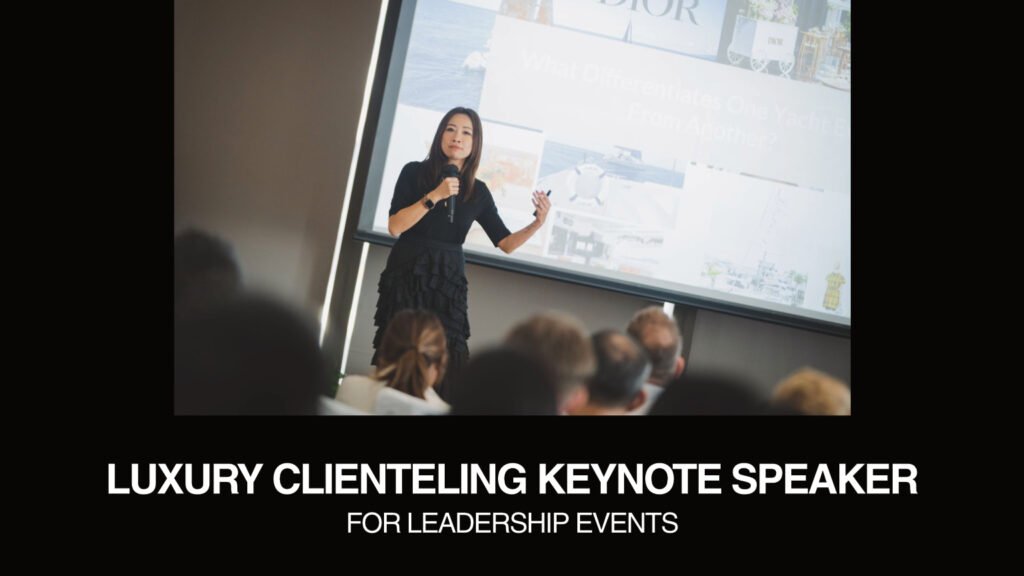
A luxury clienteling keynote speaker gives leadership audiences a way to see client relationships as a capability the organisation builds instead of a talent it hopes to hire. The keynote connects what happens between advisor and client to what leaders decide about expectations, management and measurement. It creates shared language and momentum; deeper behaviour change needs practice and coaching afterwards.
What should a leadership keynote change?
It should change what leaders expect, measure and coach. Leadership audiences already believe relationships matter, so repeating it achieves nothing. The useful move is from individual service moments to the disciplined development of relationships over time. It is also a move in the question leaders ask. “How do we get advisors to sell more?” becomes “how do we develop advisors who understand relationships well enough to recognise the right opportunity?”
That is a more demanding question, and the one leaders can act on. A keynote that answers it gives the audience a framework, a changed assumption and a clearer view of what happens next. If the room leaves with a sharper question about its own organisation, the keynote has done its work. If it leaves with a warm feeling and no change in the next management meeting, it has not.
Clienteling is a leadership capability
Luxury businesses invest in product, environments, events and technology, yet clients experience much of the brand through people. Whether client knowledge becomes relevant service or stays as data in a system is decided by advisor behaviour, and advisor behaviour is decided by what managers notice, reward and coach.
That makes clienteling a leadership issue. Leaders set the expectations, manager capability and measures that decide whether relationship development becomes everyday behaviour or an occasional initiative. Personalisation is a good example: a client’s history helps an advisor prepare, but preferences change, and leaders decide whether client intelligence supports fresh discovery or replaces it. See our page on the ROI of systematic clienteling for the commercial case.
Human craft and commercial discipline together
The keynote is built on The Art & Science of Clienteling™, the Academy’s methodology. The Art is the human craft: discovery, presence, storytelling, influence, judgement and emotional connection. The Science is the commercial discipline: client intelligence, prioritisation, continuity, purposeful next actions and measurement. Both are needed and neither is sufficient, so we present them together and never as a choice.
For a leadership audience the distinction is useful because it challenges incomplete views on either side. Relationships cannot be reduced to process and data, but they should not depend on the charm of a few gifted advisors either. Leaders who hold both halves in view can ask better questions of their own organisation. Where is the craft strong but undisciplined, and where is the discipline present but delivered without warmth?
Who gives the keynote?
Our founder brings two decades in luxury, including roles at Louis Vuitton, Burberry, Farfetch and DFS, and has given a TEDx talk on the subject. The keynote draws on that experience and on the Academy’s methodology.
What the audience gets is a speaker who understands that luxury clienteling is not customer service with more expensive products. The subject requires credibility with high-value relationships, advisor behaviour and the commercial realities of client development, and respect for a sophisticated room. Senior luxury leaders gain little from motivational statements and much from ideas that sharpen their questions.
A keynote starts change and cannot finish it
A keynote can create insight, shared language and momentum. It is the right format for aligning a leadership team, challenging established thinking or building energy around a priority.
It cannot change behaviour on its own. Understanding an idea and behaving differently under pressure are different things, and a single session does not close that gap. Where deeper development is needed, the conversation continues through practice, reinforcement and coaching for the teams who carry the idea into the boutique. The keynote is the starting point, and we say so from the stage.
How do you book the keynote?
Get in touch with the Academy and tell us about the event: who will be in the room, what the leadership team is wrestling with, and what should be different afterwards. Those answers shape the keynote more than the conference theme does. They also let us judge whether a keynote is the right format or whether another format would serve better.
We then agree the angle with you. The core argument stays the same, because it is what we believe; the examples, questions and emphasis are chosen for the audience in front of us. Contact the Academy to start that conversation.
What this means for your team
A keynote is the opening move in a leadership conversation, and it is booked for what it changes afterwards. The luxury teams we train often find the most useful outcome is one shared question for the next management meeting: what do we expect, measure and coach in client relationships? We work with luxury brands across fashion, fine jewellery and watches, hospitality, wine and spirits, and e-commerce. A keynote can be paired with development for the teams who carry the idea into the boutique. This week, if you are planning an event, write down what you want your leaders to do differently afterwards and send it to us.
Book a Discovery Call or Request a Capability Assessment
Key takeaways
- A leadership keynote on clienteling should change what leaders expect, measure and coach, not fill an entertaining hour.
- Clienteling is an organisational capability that leaders shape; it is never only an outreach task performed by advisors.
- A keynote can create shared language and momentum; it cannot, on its own, change behaviour on the floor.
- The strongest keynote leaves the audience with a sharper question about their own organisation.
Frequently asked questions
Can the keynote open a longer programme?
Yes, and it works best that way. The keynote sets the shared language and the question; a programme then turns the question into practised behaviour with managers coaching it. The Clienteling Excellence Certification Ladder is where we start that conversation. Tell us at the briefing stage if a programme may follow, so the keynote is built to lead into it.
Is it suitable for a mixed audience of leaders and advisors?
Yes. The keynote speaks to managers and advisors as well as senior leaders, because clienteling is sustained by what managers coach and advisors practise. A mixed room hears the same idea at more than one level, which helps alignment.
Does the keynote cover AI and personalisation?
It can. The leadership question is how technology strengthens client intelligence and preparation without making relationships feel automated, and why prediction is not understanding. Our page AI in Luxury Retail: Personalisation at Scale Still Needs a Human sets out the position.
What should we prepare before the event?
A short brief: who is in the room, what they already believe about clienteling, what the leadership team is struggling with, and what should be different afterwards. If a development programme may follow, tell us, so the keynote sets it up instead of standing alone.