
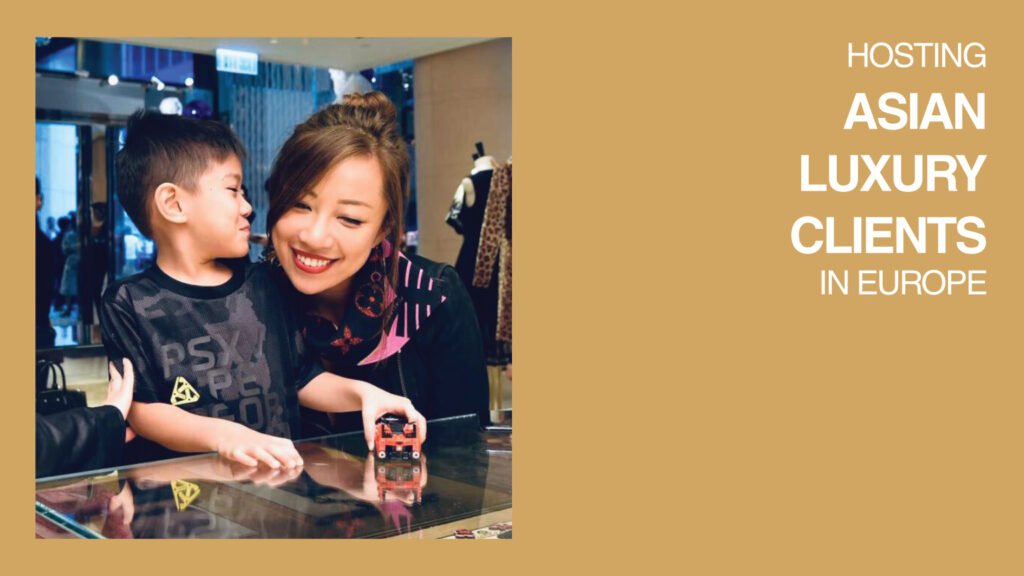
Hosting Asian luxury clients well is not a matter of learning etiquette rules. It is the ability to read what an individual wants from an interaction and adjust to it, while treating cultural background as context rather than as a conclusion.
Why do European boutiques need this now?
Luxury shopping has become borderless. Clients discover collections online, reserve appointments before travelling, and continue relationships with advisors long after returning home. A visit to Paris may shape a purchase in Singapore months later.
Bain & Company and Altagamma’s Luxury Goods Worldwide Market Study has consistently identified Asian consumers as central to global luxury demand, and The State of Fashion, from McKinsey & Company and The Business of Fashion, places client experience alongside product as a competitive axis. For a European boutique, that means every interaction is part of a longer journey rather than a single visit.
What do Asian luxury clients actually expect?
The first mistake is assuming there is one answer. Asia holds many cultures, languages and buying behaviours, and personality, profession and life stage often shape a client’s expectations more than nationality does.
Some patterns are worth knowing. Many clients research extensively before travelling and value expertise delivered without pressure. Some place high value on discretion, careful listening and unhurried pace. Others follow craftsmanship and limited editions closely and respond to authentic enthusiasm rather than a rehearsed presentation. Each of these is a starting hypothesis to be tested in the room, not a category to place someone in.
Reading a client without assuming
Before anyone speaks, four things are visible. How the client enters and orients. Where their eyes and hands go first. How they move and hold themselves. Who they came with, and what they brought.
Those observations are more reliable than nationality because they describe the person in front of you. The Academy teaches this as the Clienteling Wardrobe™, its instrument for reading how a client wants to be recognised and how an advisor naturally shows up. Much like a wardrobe, an advisor’s range is a curated collection: some pieces are instinctive, others take practice to wear comfortably. Mastery is not owning one signature piece, it is dressing for the client and the moment. The approach draws on transactional analysis (Berne, 1964) and on established research into how people build trust, applied to the luxury floor rather than the consulting room.
What does good hosting look like in practice?
Let trust come before the purchase
A first visit may involve extensive browsing with no intention to buy. That is often the client assessing whether the advisor is worth a long relationship. Patience, open answers and the absence of manufactured urgency are what convert it.
Acknowledge everyone who came
Luxury purchases are frequently shared decisions. Welcome each guest, offer refreshment to the whole party, hold eye contact across the group, and invite opinions without putting anyone on the spot.
Read the appetite for attention
Some clients enjoy a visible welcome. Others want a quiet room. Assuming every high-value client wants ceremony is as much a misread as offering none at all.
Let silence do its work
Silence allows a client to appreciate craftsmanship and think. A confident advisor stays present and available without filling it. This is often the single behaviour that most distinguishes a luxury interaction from a retail one.
Where hosting most often goes wrong
• Treating a continent as a market segment, when communication styles vary as much within countries as between them.
• Overcompensating: speaking slowly or simplifying explanations reads as patronising rather than considerate.
• Prioritising today’s transaction over a relationship that might run for a decade.
• Letting the relationship end at the door, when follow-up after the client returns home is what makes the next visit likely.
Why does behaviour matter more than knowledge here?
Cultural awareness is quickly learned. Consistently adapting behaviour under real conditions is not, and this is where most service training stops. Knowledge alone rarely changes what someone does at four o’clock on a busy Saturday.
The Art & Science of Clienteling™ addresses that gap directly. The Art develops emotional connection, storytelling, influence and presence. The Science gives the structure: reading the client, planning the relationship, and knowing what to do next. It reflects our founder’s two decades of client development across Louis Vuitton, Burberry, Farfetch and DFS.
How do luxury brands build this across a team?
Individual talent is not the same as organisational capability. The Academy supports brands through a certification pathway that develops advisors and leaders progressively, a diagnostic suite that establishes where capability actually sits before any programme is designed, and Learning Labs that rehearse behaviour until it becomes instinctive.
Together these help an organisation deliver a consistent client experience while allowing every advisor to remain themselves.
Book a Discovery Call or Request a Capability Assessment
Key takeaways
• European boutiques now serve clients who shop across several countries and expect recognition to travel with them.
• Culture gives context, never conclusions. Two clients from the same city often want entirely different things.
• Read behaviour in the room before the conversation starts: how someone arrives, where their attention goes, who they came with.
• Trust usually precedes purchase. A long first visit with no sale is often the beginning of a relationship, not the end of one.
• The Clienteling Wardrobe™ gives advisors a way to read what a client wants from the interaction, and to adjust how they show up.
Frequently asked questions
What are the best practices for hosting Asian luxury clients?
Observe before assuming. Read how the client arrives, where their attention goes and who they came with, then adjust your approach to match. Build trust before discussing product, acknowledge everyone in the party, and follow up thoughtfully after they return home.
Why is cultural intelligence important in luxury retail?
It allows advisors to adapt naturally to clients from different backgrounds while holding a consistent standard. It reduces misreading, shortens the time it takes to build rapport, and supports relationships that continue across markets.
How do you adapt communication to different clients?
Advisors learn to read four forms of recognition a client may be looking for, and to adjust their own approach to match. The Academy teaches this through the Clienteling Wardrobe™, which reads both the client and the advisor, so the adjustment is deliberate rather than instinctive.
How can European boutiques better serve clients travelling from Asia?
Prepare before the appointment, demonstrate genuine product knowledge, avoid promotional pressure, and continue the conversation after the client has left the country. Continuity is what turns a single visit into a relationship.
Can cultural sensitivity training improve client loyalty?
Developing behavioural capability and adaptive communication helps teams build stronger relationships and deliver more consistent experiences. Outcomes vary by market, implementation and organisational commitment.