How much of your communication impact comes from what you say, and how much comes from everything you don’t say?
Let me ask you a few questions.
If you were asked to role-play a five-minute client interaction without speaking, could you do it?
More importantly…
Would it feel natural or uncomfortable?
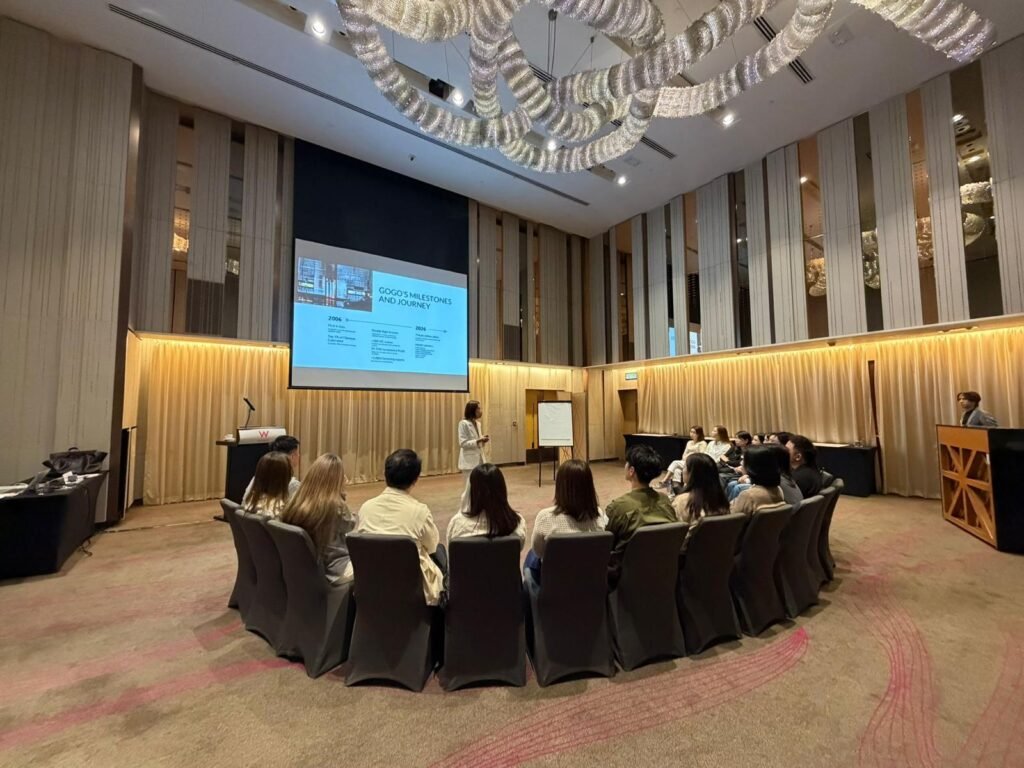
Recently, I delivered a luxury retail workshop where almost 80% of the session took place in complete silence.
Participants communicated entirely through body language, facial expressions and presence.
It became one of the most memorable learning experiences of the programme.
Because the truth is simple.
Words are often overrated.
In clienteling, how we show up can be just as important as what we say.
Research by Albert Mehrabian suggests that communication is influenced not only by our words, but also by our tone of voice and non-verbal behaviour. While these findings apply specifically to situations involving feelings and attitudes, they remind us that body language plays an important role in how messages are received.
Exceptional clienteling goes beyond conversation. It requires self-awareness, observation and the ability to communicate trust through non-verbal behaviour.
1. Self-Awareness Comes First
Before we can understand others, we first need to understand ourselves.
Try this.
Stand in front of a mirror and express different emotions.
Joy.
Calmness.
Excitement.
Can you genuinely embody each one?
For many people, this is surprisingly difficult.
Before stepping onto the shop floor or into a client meeting, take a moment to:
- Acknowledge your emotional state.
- Reset your energy intentionally.
- Align your facial expressions, posture and mindset.
Clients notice much more than we realise.
2. Learn to Read Non-Verbal Signals
One of my favourite communication exercises explores personal space.
Two people slowly walk towards each other until one naturally feels the need to stop.
Almost every pair stops at different distances.
It’s a simple reminder that everyone experiences comfort differently.
The same applies when working with clients.
Pay attention to the signals they give you.
- Do they welcome interaction or prefer more space?
- What naturally captures their attention?
- What might hesitation really be communicating?
- How can you adapt to make them feel more comfortable?
Listening isn’t only about hearing words.
It’s also about observing behaviour.
3. Mirror to Create Comfort and Trust
Mirroring is one of the most subtle and effective communication skills.
When used naturally, it creates familiarity and helps people feel understood.
It works on two levels.
Social Context
Different cultures have different expectations.
In some countries, a senior client may initiate a handshake.
In others, greetings are much less formal.
Understanding cultural context helps advisors respond appropriately.
Personal Context
Every individual also communicates differently.
Some people bring high energy.
Others are quieter and more reflective.
Notice their pace.
Their gestures.
Their rhythm.
Rather than copying them, gently adapt your own communication style.
When done authentically, mirroring quietly communicates:
“I understand you.”
Ready to strengthen your team’s communication skills and clienteling capabilities? Book a discovery call to explore how The Clienteling Academy can support your business.
Beyond Words
If you work in luxury, non-verbal communication is not simply a nice skill to have.
It is an essential part of creating exceptional client experiences.
It strengthens your personal presence.
Builds trust.
Deepens relationships.
And supports confident, high-quality client interactions.
Like any skill, it can feel uncomfortable at first.
But with awareness and practice, it quickly becomes one of the most powerful communication tools you have.
This Week’s Reflection
Before your next client conversation, pause for a moment and ask yourself:
- What message am I communicating before I say a single word?
- Am I fully present?
- What non-verbal signals is my client giving me?
- How can I adapt my communication to help them feel more comfortable?
Because in luxury clienteling, the strongest conversations often begin before anyone speaks.
FAQ
Why is non-verbal communication important in luxury retail?
Non-verbal communication helps client advisors build trust, understand client needs and create more meaningful interactions before a single word is spoken.
What is non-verbal communication?
Non-verbal communication includes facial expressions, body language, posture, eye contact, gestures and tone of voice, all of which influence how messages are received.
How can client advisors improve non-verbal communication?
By increasing self-awareness, observing clients more carefully and adapting their communication style naturally to each individual.
How does The Clienteling Academy develop communication skills?
Through the Art and Science of Clienteling, The Clienteling Academy helps luxury professionals strengthen communication, emotional intelligence and relationship-building behaviours that create lasting client loyalty.