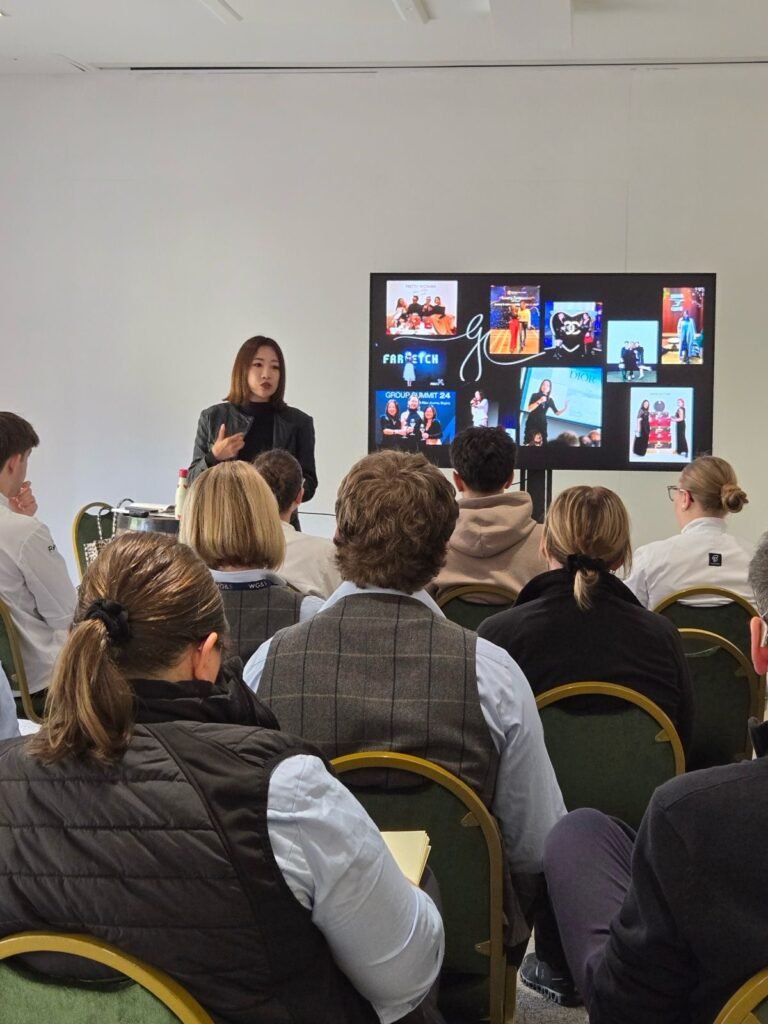
Asking the right question at the right time transforms your relationship with customers from transactions into one where they feel seen and valued.
Last week’s newsletter explored the first foundation of luxury clienteling, building an instant connection that drives conversion. Today, I’d like to share the second essential, cultivating relationships that encourage customers to return, not simply because of the products you sell, but because of how you make them feel.
In my experience, this is where true clienteling begins.
The most memorable client advisors are rarely those who know every product specification. They are the ones who know how to create meaningful conversations. They listen with genuine curiosity, ask thoughtful questions and help clients feel understood beyond the purchase.
That is what transforms a transaction into a lasting relationship.
What Are Luxury Clienteling Conversations?
Luxury clienteling conversations are meaningful discussions that help client advisors understand a customer’s lifestyle, motivations, interests and aspirations beyond the products they purchase. These conversations build trust, deepen emotional connections and create long-term client loyalty.
The Evolving Art of Luxury Experiential Retail
Before diving into the topic, let’s step back and consider how luxury retail has evolved.
According to McKinsey’s research into luxury consumers’ expectations for offline experiences, many customers now expect boutiques to offer far more than beautiful products. They look for engaging retail environments, thoughtfully integrated technology and, above all, memorable human interactions.
Nearly half of frequent luxury consumers surveyed agreed that luxury stores should be destinations worth visiting, even when they are not planning to make a purchase.
This makes the role of the Client Advisor more important than ever.
Beautiful boutiques may attract customers through the door, but meaningful conversations are what encourage them to come back.
From Transactions to Connections: Mastering Luxury Clienteling Conversations
One of the biggest challenges I continue to see, particularly when working with luxury client-facing teams across Asia, is moving conversations beyond the product itself.
It’s rarely because advisors don’t care.
Instead, many are held back by a few common misconceptions.
Myth 1: Asking personal questions invades customer privacy
Many advisors worry they’ll appear intrusive.
In reality, clients usually appreciate genuine interest when questions are asked naturally and at the appropriate stage of the relationship.
Myth 2: My customers know far more about lifestyle topics than I do
Luxury clients often have fascinating experiences, whether in travel, art, fashion, wine or culture.
The goal isn’t to impress them with your knowledge.
It’s to be genuinely interested in learning from them.
Curiosity is far more powerful than expertise.
Myth 3: Customers only want to talk about products
Products may begin the conversation.
Relationships are built through people.
When customers feel recognised as individuals rather than simply buyers, loyalty naturally follows.
The Foundation of Powerful Questioning
A core part of successful luxury clienteling is asking powerful questions with confidence.
The right question opens the door to your customer’s world. It helps you understand who they are, what matters to them and how you can create experiences that feel personal rather than transactional.
Here are some examples that I often encourage client advisors to explore as relationships naturally develop.
Personal Interests
Instead of staying focused on products, invite customers to share what inspires them.
“Who is your favourite designer, and what do you admire about their creations?”
“What’s your favourite holiday destination, and what makes it special for you?”
These conversations reveal personality while creating natural opportunities for future engagement.
Lifestyle Preferences
Understanding lifestyle helps you personalise future interactions.
“What’s your go-to drink on a happy Friday?”
“If we were to organise different client events, which ones would you enjoy attending?”
Small details often become the foundation of memorable service.
Customer Motivations
Sometimes the simplest questions uncover the most valuable insights.
“What’s important to you about this product?”
“How can I best support you today?”
Rather than assuming why someone is buying, let them tell you.
Memorable Experiences
People love sharing meaningful memories.
“What’s the most memorable luxury event you’ve attended, and what made it so special?”
“Have you ever been pleasantly surprised by a retail experience? What happened?”
The answers often reveal exactly what exceptional service means to that individual client.
Aspirations and Dreams
Luxury purchases are often connected to emotion and identity.
“How do you hope to feel when wearing this?”
“Who inspires your personal style, and why?”
These questions move beyond products and into purpose.
Personal Reflections
As trust develops, conversations naturally become more personal.
“How would your best friend describe you?”
“Is there anything we could do differently to make your experience even better?”
Sometimes the most valuable client insights come from simply asking.
Asking the right question at the right time transforms your relationship with customers from transactions into one where they feel seen, understood and genuinely valued.
It Takes Two to Tango
Great conversations are never one-sided.
While it’s important to create space for clients to share, don’t underestimate the value of sharing something about yourself too.
Perhaps you’ve visited the same destination.
Perhaps you’ve recently discovered a wonderful restaurant.
Perhaps you’ve attended an exhibition they mention.
Authentic conversations create trust because they feel human.
The goal isn’t to dominate the conversation, but to create genuine connection through mutual curiosity.
The Art and Science of Clienteling
At The Clienteling Academy, we describe effective clienteling as the balance between Art and Science.
The Art is about mastering relationship-building through meaningful conversations, active listening, storytelling and emotional intelligence.
The Science is about understanding communication preferences, applying strategic client development and adapting your approach.
Together, they enable client advisors to create personalised experiences that strengthen relationships while supporting long-term commercial growth.
Relationships Will Always Outlast Transactions
Looking back over my years in luxury retail, one lesson stands out above all others.
I’ve never seen lasting loyalty created because someone remembered a stock number.
I’ve seen loyalty created because someone remembered a birthday.
A favourite holiday destination.
An important family celebration.
A conversation from six months earlier.
Luxury has never been only about products.
It has always been about people.
Products begin conversations.
Relationships keep clients coming back.
Ready to Build Clienteling Excellence? Book a discovery call to explore how The Clienteling Academy can support your business.
FAQ
Why are luxury clienteling conversations important?
They help client advisors understand customers beyond their purchases, creating meaningful relationships that encourage long-term loyalty and repeat business.
What makes a good clienteling question?
A good clienteling question is open-ended, relevant to the stage of the relationship and driven by genuine curiosity rather than gathering information for its own sake.
How do conversations improve customer loyalty?
Customers are more likely to return when they feel recognised, understood and valued. Meaningful conversations create emotional connections that product knowledge alone cannot achieve.
How does The Clienteling Academy develop these skills?
The Academy develops relationship-building capabilities through The Art and Science of Clienteling, combining emotional intelligence and strategic client development to embed lasting behavioural change.