
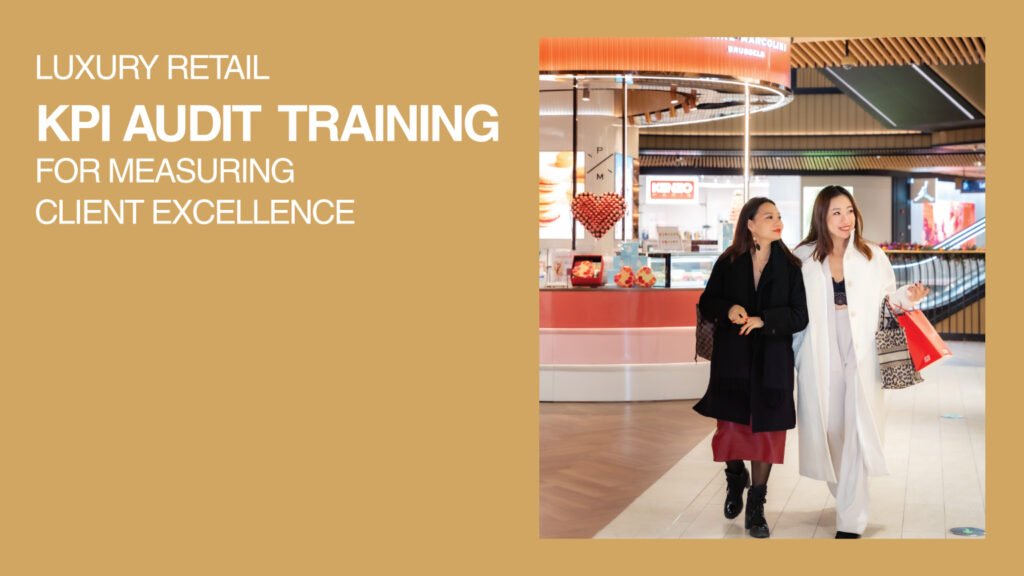
Luxury brands invest heavily in creating exceptional client experiences, yet many still rely on traditional retail metrics to evaluate success. Sales figures, conversion rates and average transaction values remain important, but they reveal only part of the story. They explain what happened, not why it happened, nor whether today’s performance is sustainable through long-term client relationships.
The most successful luxury organisations measure client excellence through a balanced framework of commercial, behavioural and experiential KPIs. Rather than viewing customer experience as a soft metric, they treat it as a measurable capability that influences loyalty, client lifetime value and sustainable commercial performance.
A luxury retail KPI audit identifies how effectively an organisation creates meaningful client relationships by combining customer experience metrics, behavioural observations and commercial performance indicators. The most valuable audits connect numbers with human behaviours, enabling leaders to improve both service quality and long-term client development.
At The Clienteling Academy, this philosophy sits at the heart of The Art & Science of Clienteling ™. Drawing on Founder Gogo Cheng’s two decades of leadership at Louis Vuitton, Burberry, Farfetch and DFS, the Academy helps organisations understand not only which metrics matter, but how behavioural excellence drives measurable commercial outcomes. The methodology is strengthened through integration of the Process Communication Model (PCM), enabling teams to adapt communication styles and build stronger relationships with culturally diverse high-net-worth clients.
What Is Luxury Retail KPI Audit Training?
Luxury retail KPI audit training is a structured approach to evaluating client experience by measuring behavioural excellence alongside commercial performance. Instead of focusing exclusively on revenue, it assesses how consistently teams create meaningful client relationships that generate long-term loyalty.
A comprehensive audit considers three interconnected dimensions:
- Commercial performance
- Client relationship quality
- Behavioural capability
These dimensions provide leadership teams with a more complete picture of organisational health than sales reports alone.
For luxury brands serving high-net-worth individuals, this distinction is essential. A boutique may achieve excellent monthly sales while simultaneously weakening future client loyalty through inconsistent service behaviours. Conversely, a team investing in meaningful client development may build stronger long-term value even if immediate revenue appears unchanged.
Why Traditional Retail KPIs Are No Longer Enough
Luxury purchasing decisions are rarely driven by product alone. Clients remember how they felt during every interaction.
This makes behavioural consistency just as important as operational efficiency.
Traditional retail reporting often focuses on metrics such as:
- Sales revenue
- Conversion rate
- Average transaction value
- Units per transaction
- Footfall conversion
While valuable, these indicators fail to answer important leadership questions.
For example:
- Are advisors building genuine client relationships?
- Are VIP clients becoming more loyal?
- Which behaviours create repeat appointments?
- How consistently do teams personalise experiences?
- Where are opportunities for capability development?
Without behavioural measurement, organisations risk optimising short-term transactions instead of long-term client development.
The Five Categories of Client Excellence KPIs
A robust customer experience audit combines several categories of measurement rather than relying on a single scorecard.
1. Client Relationship KPIs
Relationship metrics indicate whether meaningful connections are strengthening over time.
Examples include:
- Repeat purchase frequency
- Appointment booking rate
- Client retention
- Reactivation success
- Referral activity
- Personal shopping engagement
- Client Development Index progression
Rather than measuring activity alone, these indicators evaluate relationship quality.
For example, increasing appointment bookings is encouraging only when those appointments translate into stronger loyalty and personalised engagement.
2. Behavioural Excellence KPIs
This is where many organisations discover their greatest opportunity.
Behavioural KPIs evaluate how consistently clienteling principles are demonstrated across every interaction.
Examples include:
Curiosity
Does the advisor actively uncover client motivations rather than simply identifying product needs?
Connection
Does the advisor create emotional engagement through storytelling, empathy and authentic conversation?
Commitment
Does every interaction include meaningful follow-up that strengthens the relationship?
These behavioural observations often reveal why two advisors with similar sales performance achieve dramatically different long-term client retention.
The Clienteling Academy measures these behaviours through structured observation frameworks within its Clienteling Behaviour Excellence Audits, helping leaders identify capability gaps before they affect commercial performance.
3. Customer Experience Quality Metrics
Luxury experiences should be evaluated from the client’s perspective.
Relevant measures include:
- Personalisation consistency
- Emotional satisfaction
- Service recovery quality
- Response times
- Omnichannel continuity
- Client feedback themes
- Mystery shopping observations
Unlike generic customer satisfaction surveys, luxury CX audits examine whether experiences reflect brand values while feeling individually tailored.
This balance is especially important for high-net-worth clients whose expectations continue to evolve across physical boutiques, digital channels and private appointments.
4. Commercial Performance Indicators
Commercial KPIs remain essential.
However, they become more meaningful when interpreted alongside behavioural metrics.
Typical measures include:
- Client lifetime value
- Average spend growth
- Cross-category purchasing
- Repeat purchase revenue
- High-value client acquisition
- Client retention value
Rather than asking “How much revenue was generated?”, leadership teams should ask:
“Which clienteling behaviours consistently produce sustainable commercial growth?”
This subtle shift changes how organisations invest in learning, coaching and leadership development.
5. Capability Development Metrics
Exceptional customer experiences rarely happen by accident.
They emerge when organisations continuously develop their people.
Capability-focused KPIs include:
- Clienteling competency scores
- Behaviour adoption after training
- Leadership coaching effectiveness
- Learning application
- Team confidence
- Communication adaptability
- Diagnostic improvement scores
These metrics allow leaders to evaluate whether capability-building investments are translating into everyday behavioural change.
Rather than measuring training attendance alone, they assess whether new behaviours become embedded across teams.
Measuring What Clients Actually Experience
One of the most common mistakes organisations make is measuring internal processes rather than external experiences.
For example, recording that a client profile has been updated says little about whether the interaction felt meaningful.
Instead, luxury brands should ask questions such as:
- Did the client feel genuinely understood?
- Was the interaction memorable?
- Was communication personalised?
- Did the advisor anticipate future needs?
- Was the follow-up relevant and timely?
These questions move beyond operational compliance and focus on emotional outcomes, the true differentiator in luxury clienteling.
This is precisely why The Clienteling Academy’s methodology combines The Art of emotional connection with The Science of measurable client development. Rather than separating commercial performance from human connection, the framework demonstrates how one strengthens the other.
From Data to Behavioural Insight
Collecting KPIs is only the first step.
Many luxury organisations already possess significant volumes of client data through CRM systems, appointment records and sales reporting. The challenge lies in translating that information into behavioural insight that leaders and boutique teams can act upon.
The Academy’s Diagnostic Suite addresses this gap by evaluating both individual capability and the wider clienteling ecosystem. Instead of asking only whether targets have been achieved, it helps leadership teams understand why certain behaviours consistently produce stronger client relationships while others limit long-term growth.
This diagnostic-led approach enables organisations to prioritise development where it will have the greatest commercial and cultural impact, creating a clear roadmap for sustainable clienteling excellence rather than isolated performance improvements.
The Role of the Process Communication Model (PCM) in Customer Experience Audits
While KPIs reveal what is happening across a business, they rarely explain why certain client interactions succeed while others fail. This is where behavioural science becomes invaluable.
The Clienteling Academy integrates the Process Communication Model (PCM) into its clienteling methodology to help luxury professionals understand communication preferences, recognise behavioural patterns and adapt their approach in real time. Used by NASA and more than 1.5 million professionals worldwide, PCM provides a structured framework for building rapport with diverse personalities and cultural backgrounds.
In a luxury retail environment, behavioural adaptability can significantly influence the quality of client relationships. Two advisors may follow identical service standards, yet achieve very different outcomes because one instinctively adjusts their communication style while the other applies the same approach to every client.
When PCM insights are incorporated into a luxury retail KPI audit, leaders can assess behavioural capability alongside commercial performance. This creates a richer understanding of how communication influences loyalty, appointment conversion, repeat purchases and long-term client development.
Rather than measuring service consistency alone, organisations begin measuring relationship effectiveness.
Building a Client Excellence Scorecard
A meaningful scorecard balances commercial outcomes with behavioural indicators. Overemphasising revenue risks encouraging transactional behaviours, while focusing exclusively on client sentiment may overlook commercial sustainability.
An effective client excellence scorecard typically includes four dimensions.
Client Development
This area measures the health of long-term relationships.
Typical indicators include:
- Client Development Index
- VIP retention
- Appointment conversion
- Repeat purchase frequency
- Client reactivation success
- Referral generation
These metrics demonstrate whether relationships are becoming deeper over time rather than remaining purely transactional.
Customer Experience
Experience indicators evaluate whether every interaction reflects the brand’s luxury positioning.
Measures may include:
- Personalisation quality
- Client satisfaction themes
- Service recovery effectiveness
- Omnichannel consistency
- Boutique hospitality standards
- Mystery shopping observations
When reviewed alongside behavioural audits, these metrics reveal where client expectations are being exceeded and where inconsistency exists.
Team Capability
Exceptional experiences depend on capable people.
Leadership teams should monitor behavioural development through measures such as:
- Clienteling competency assessments
- Coaching effectiveness
- Behaviour adoption after learning programmes
- Communication adaptability
- Leadership observation scores
- Diagnostic improvements
Capability metrics help organisations understand whether development initiatives are creating lasting behaviour shift rather than temporary knowledge gains.
Commercial Impact
Commercial metrics remain an essential component of every audit.
Relevant indicators include:
- Client lifetime value
- Average spend progression
- Cross-category purchasing
- High-value client acquisition
- Revenue generated through appointments
- Retention-driven sales growth
Viewed together, these four dimensions provide a balanced picture of organisational performance that is both commercially rigorous and client centred.
Practical Example: Measuring Client Excellence in Action
Imagine two flagship boutiques operating within the same luxury brand.
Both boutiques exceed monthly sales targets and achieve similar average transaction values. On paper, performance appears almost identical.
However, a deeper client experience audit reveals significant differences.
Boutique A
- Strong repeat appointment rates
- High client retention
- Consistent follow-up communication
- Advisors adapt naturally to individual client preferences
- High behavioural assessment scores
Boutique B
- Heavy reliance on walk-in traffic
- Lower repeat purchase frequency
- Limited client development activity
- Generic follow-up communications
- Inconsistent behavioural observations
Without a structured luxury retail KPI audit, these differences remain hidden.
Although Boutique B currently performs well commercially, its long-term client loyalty may gradually weaken as competitors deliver more personalised experiences. Boutique A, meanwhile, is building a stronger foundation for sustainable growth.
This illustrates why customer experience audits should always combine commercial performance with behavioural insight.
Why Behaviour Matters More Than Individual KPIs
Luxury brands often ask which KPI matters most.
The more useful question is whether all KPIs work together to tell a coherent story.
For example, an increase in average transaction value may appear positive. However, if repeat purchase rates decline and client satisfaction falls simultaneously, the business could be sacrificing long-term loyalty for short-term revenue.
Similarly, high appointment volumes mean little if conversations remain transactional and clients fail to return.
Behaviour creates the link between activity and outcome.
When leaders understand which behaviours consistently influence loyalty, trust and advocacy, coaching becomes more focused and capability investments become more effective.
How The Clienteling Academy Measures Client Excellence
The Clienteling Academy approaches performance measurement differently from traditional retail audits because it combines behavioural science with commercial strategy.
The Academy’s Art & Science of Clienteling ™ framework recognises that meaningful commercial growth begins with meaningful human relationships.
The methodology combines:
- Behavioural excellence through emotional intelligence, storytelling, influence and client perception.
- Commercial discipline through strategic client development and relationship planning.
- Communication adaptability through the Process Communication Model (PCM).
- Continuous capability development through practical application rather than theoretical learning.
This philosophy is supported through three interconnected pillars.
The Clienteling Excellence Certification Ladder
A progressive capability pathway that develops client-facing professionals and leaders through increasingly advanced clienteling skills, behavioural mastery and commercial excellence.
The Clienteling Excellence Diagnostic Suite
From individual capability assessments to organisation-wide clienteling ecosystem audits, the Diagnostic Suite helps leadership teams identify capability gaps, benchmark current performance and prioritise strategic development opportunities.
Rather than applying generic training programmes, the Academy tailors recommendations according to diagnostic findings, ensuring every intervention reflects each organisation’s commercial objectives and cultural context.
The Clienteling Embodiment Programmes
Behaviour change occurs through consistent practice.
The Embodiment Programmes reinforce learning through immersive Learning Labs, coaching and real-world application, enabling storytelling, client perception, communication and relationship development to become everyday habits rather than occasional techniques.
Together, these three pillars create an integrated ecosystem that helps luxury organisations move beyond measurement towards meaningful capability transformation.
What Luxury Organisations Gain from a Client Excellence Audit
Organisations that adopt a comprehensive approach to customer experience measurement benefit in several ways.
Leadership teams gain greater confidence in strategic decision making because performance discussions move beyond sales figures alone.
Managers develop clearer coaching priorities based on observable behaviours rather than subjective opinions.
Client advisors receive practical feedback that helps them strengthen relationships with high-net-worth clients.
Learning and development teams can demonstrate how capability-building contributes to measurable behavioural improvement.
Most importantly, organisations create stronger alignment between commercial objectives and exceptional client experiences.
This reflects the philosophy behind The Clienteling Academy’s work with leading luxury brands across fashion, jewellery, hospitality and premium retail, where behavioural capability is viewed as a strategic commercial asset rather than simply a training initiative.
When Should Your Organisation Consider a Luxury Retail KPI Audit?
Many organisations introduce customer experience audits after performance declines.
The strongest luxury brands take a different approach.
They measure client excellence proactively to identify opportunities before they become commercial challenges.
A structured audit is particularly valuable when:
- Customer expectations are evolving rapidly.
- Boutique performance varies significantly between locations.
- New clienteling strategies are being introduced.
- Leadership seeks greater consistency across regions.
- Learning investments require measurable outcomes.
- Client loyalty has become a strategic priority.
Regular audits enable continuous improvement while ensuring organisational capability evolves alongside changing client expectations.
Measuring Client Excellence Starts with Measuring the Right Behaviours
The most valuable luxury retail KPI audit is not the one with the greatest number of metrics. It is the one that connects behavioural excellence with commercial performance and gives leaders practical insight into how exceptional client relationships are created.
At The Clienteling Academy, our Art & Science of Clienteling ™ framework helps luxury organisations evaluate customer experience through behavioural observation, strategic client development and evidence-based capability building. By combining commercial rigour with the Process Communication Model (PCM), our programmes provide leadership teams with a practical roadmap for strengthening client loyalty, enhancing boutique performance and embedding clienteling excellence across the organisation.
Book a Discovery Call or Request a Capability Assessment to explore how a bespoke client experience audit can help your organisation measure what truly drives long-term client relationships.
FAQ
What is a luxury retail KPI audit?
A luxury retail KPI audit evaluates customer experience, client development, behavioural capability and commercial performance to identify opportunities for improving long-term client relationships.
Which KPIs are most important for measuring client excellence?
The most effective scorecards combine commercial KPIs, client relationship metrics, behavioural observations, customer experience measures and capability development indicators rather than relying on sales figures alone.
Why are behavioural KPIs important in luxury retail?
Behavioural KPIs reveal how consistently client advisors demonstrate curiosity, connection, communication adaptability and commitment, all of which influence client loyalty and lifetime value.
How does PCM improve customer experience?
The Process Communication Model helps professionals recognise communication preferences and adapt their interactions accordingly, enabling stronger rapport with high-net-worth clients across diverse cultures.
How often should luxury brands conduct customer experience audits?
Many organisations benefit from annual or biannual audits, supported by regular behavioural observations and ongoing coaching to maintain consistent clienteling excellence.
How does The Clienteling Academy support luxury brands?
The Clienteling Academy combines the Art & Science of Clienteling ™, the Clienteling Excellence Certification Ladder, the Diagnostic Suite and Embodiment Programmes to help organisations measure, develop and sustain relationship-led commercial excellence through bespoke capability programmes.

